
By: Grace Lamendola
Remember Blockbuster?
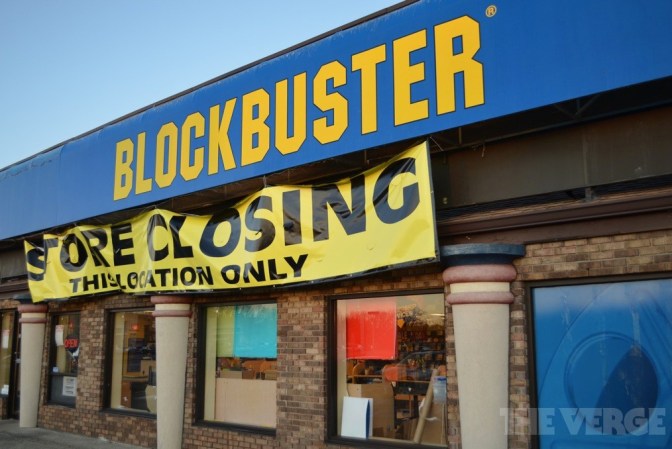
For millions of Americans, a Friday night once meant walking through rows of blue-and-yellow movie cases, arguing over what to rent, and hoping someone else had not already taken the last copy of the new release.
Today, there is almost nothing left of that Blockbuster.
The company that once reached 43 million member households and operated thousands of stores has been reduced to a single surviving franchise location in Bend, Oregon. The video-rental empire is gone. The brand, however, has not disappeared.
In fact, Blockbuster is now arguing that its brand remains famous enough to receive one of trademark law’s strongest protections.
That argument has landed before the Trademark Trial and Appeal Board in an opposition brought by Blockbuster L.L.C. against Southern Seed and Feed LLC, which is seeking to register “BLOCK BUSTER” for animal feed products.
Yes, animal feed.
At first glance, the dispute seems almost too strange to be real. What could a former video-rental company possibly have to do with livestock feed?
Quite a lot, according to Blockbuster.
Blockbuster argues that Southern Seed and Feed’s branding creates a likelihood of confusion because its label uses yellow lettering against a blue background and incorporates a ripped-ticket design reminiscent of Blockbuster’s registered logo. But Blockbuster is also making a more ambitious argument: that its trademarks are famous enough to support a claim for dilution by blurring.
And that is where this otherwise unusual trademark dispute becomes much more interesting.
What Does “Famous” Actually Mean?
Most people understand fame intuitively.
Blockbuster is famous. Ask someone to picture the brand and they will probably see the blue-and-yellow sign, the movie-rental cases, or the familiar ticket-shaped logo.
But trademark law is less sentimental.
Dilution is not ordinary trademark protection. A traditional likelihood-of-confusion claim generally asks whether consumers might mistakenly believe that two brands are connected. Dilution operates differently. It protects certain exceptionally famous marks from uses that weaken their distinctiveness or damage their reputation, even when the parties sell completely unrelated goods.
That means a famous mark does not necessarily have to compete with the junior user.
The goods do not have to be similar.
The consumers do not necessarily have to be confused.
But there is a significant threshold: the mark must actually be famous in the legal sense.
And that fame must exist when the claim is being evaluated, not merely at the height of the brand’s commercial success.
That presents Blockbuster with a difficult question.
Blockbuster was unquestionably famous.
But is it still famous?
Can a Brand Be Famous After It Dies?
This is where Blockbuster’s story becomes a broader question about the life cycle of trademarks.
A brand can disappear from the marketplace without disappearing from the public consciousness.
Blockbuster may no longer have thousands of stores, but its name continues to evoke an entire era of American culture. The brand appears in memes, merchandise, documentaries, social-media posts and nostalgic conversations about a time when choosing a movie meant physically going somewhere to find one.
The irony is that Blockbuster’s cultural staying power may be both its greatest asset and its greatest problem.
Consumers remember Blockbuster because it was once everywhere.
But dilution law asks whether the mark is famous now.
That distinction matters.
A brand can be culturally recognizable without maintaining the same commercial presence that made it famous in the first place. And trademark law has historically demanded more than simple recognition when it comes to dilution.
The question, then, is not whether Americans remember Blockbuster.
They do.
The question is whether remembering a brand is enough to make that brand legally famous.
The Rise of the “Zombie Brand”
Blockbuster may be one of the clearest examples of what could be called a zombie brand: a brand that is commercially diminished but culturally alive.
The phenomenon extends well beyond Blockbuster.
Think of brands such as Toys “R” Us, Circuit City or BlackBerry. Their commercial stories are complicated and different, but they illustrate the same broader phenomenon: consumers can maintain strong associations with a brand long after its original business model has disappeared or dramatically changed.
That creates a fascinating problem for brand owners.
If a company spends decades building recognition, can that recognition become a kind of intellectual-property asset that survives the company itself?
Or does trademark protection require something more?
The answer matters because trademarks are not supposed to function simply as trophies commemorating past commercial success. They are tied to the marketplace. Their purpose is to identify the source of goods or services and protect the distinctiveness and goodwill associated with those marks.
That makes dormant brands particularly interesting.
Their goodwill may still exist in the public imagination, but their relationship with the marketplace may look very different.
Brand Protection After the Brand Is Gone
The Blockbuster dispute therefore raises a question that extends beyond one animal-feed application:
What happens to brand protection after the brand itself is gone?
For companies with dormant or legacy brands, the answer could influence how aggressively they maintain trademarks, license their intellectual property, monitor third-party uses and preserve commercial activity.
A company that allows a once-famous mark to disappear entirely from commerce may eventually face a very different trademark landscape than the company that continues using that mark through licensing, merchandising or other controlled commercial activity.
That does not mean cultural recognition is meaningless.
In fact, Blockbuster demonstrates just how powerful cultural recognition can be.
But there is a difference between being remembered and being commercially alive.
And that distinction may be exactly what the TTAB has to confront.
More Than a Fight Over Animal Feed
It would be easy to look at the Blockbuster dispute and see a strange trademark fight between a nostalgic video-rental company and an animal-feed business.
But the case is really asking a much bigger question.
How long can a brand remain famous after the business behind it fades away?
If Blockbuster can establish the kind of present-day fame necessary for dilution protection, the decision could offer an important lesson for other legacy brands whose cultural influence has outlasted their original businesses.
If it cannot, the case could reinforce a different principle: trademark fame cannot simply be banked forever. A brand may remain beloved, recognizable and culturally significant while eventually losing the extraordinary legal status that comes with dilution fame.
Either way, Blockbuster is proving that a brand does not necessarily have to be alive in the marketplace to remain alive in the public imagination.
The question for trademark law is whether that is enough.
Because while Blockbuster may be dead as a business, its trademark may have a little life left in it yet.

 Open Bench