What the Premier League’s financial case against City reveals about how sports leagues enforce their own rules.
By: Trent Sargent

The Rise of Manchester City
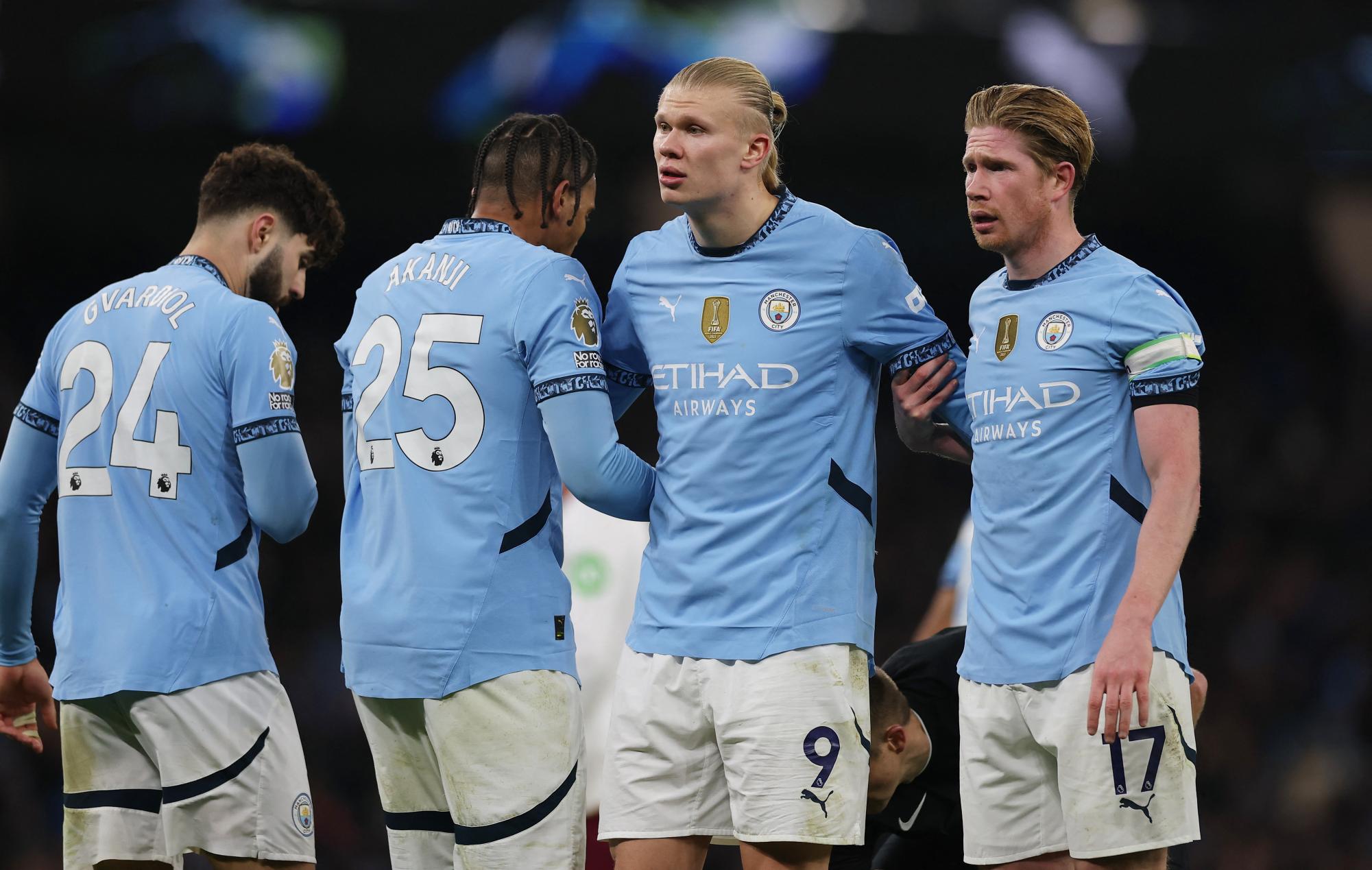
In the early 2000s, Manchester City was plagued by underinvestment and faced huge projected losses. The club feared it would break the record for the largest single-season financial loss by a Premier League club in the 2009/10 season.
In 2008, the club was purchased by Abu Dhabi United Group Investment and Development Ltd. (ADUG). Under the new owners, the club experienced massive growth. The club went on to win an abundance of major trophies in the years after 2008, including eight Premier League titles and one UEFA Champions League title.
Yet, the newfound success of the club came with scrutiny. In 2014, UEFA began to question City’s sponsorship deals and fair play compliance, and the two settled without a finding. This was followed by City’s servers being hacked in 2017, and in November 2018 Der Spiegel published articles questioning where the sponsorship money really came from, prompting an investigation by both UEFA and the Premier League.
What the Premier League Alleged
In February 2023, the Premier League charged City with more than 100 individual breaches of the Premier League Rules across the course of multiple seasons. The individual breaches were grouped into four categories:
Charge 1: Filing accounts that did not give a true and fair view of the club’s financial position, and breaching its duty of “utmost good faith.”
Charge 2: Breaching UEFA Financial Fair Play (FFP) rules.
Charge 3: Breaching the Premier League’s Profitability and Sustainability Rules (PSR), which require “a Premier League member club to meet certain financial thresholds.”
Charge 4: Failing to cooperate with the investigation.
City denied all of the charges. The hearing lasted 42 days in late 2024. City was found guilty on every charge but a narrow cooperation charge.
How Owner Funding Was Disguised as Sponsorship Revenue
A “Disguised Funding Scheme” was devised in early 2010 to disguise shareholder funding by ADUG as “commercial partner revenue” (sponsorship income). City would enter into sponsorship agreements containing substantial sponsorship fees that were way above fair market value at the time. The sponsor would pay only a base sum, and ADUG would pay the rest. City would book the deals as sponsorship revenue, but it was owner investment in substance. UEFA FFP rules count sponsorship income but not owner investment. The relabeling made City look self-sufficient. The Commission found City’s income was overstated by more than £830 million from 2009/10 to 2017/18.
“The Fordham Arrangement” was a closed-circle deal entered into with a third party (Fordham). The arrangement was used by ADUG to conceal the true source of funds and allow the club to pretend such funds were income in its financial statements and FFP returns. The arrangement was also used to erase liabilities, allowing the club to essentially remove operating expenses from financial statements and FFP returns.
The Commission consistently refers to these deals as “shams.” It found that City had knowingly entered into them to get around the rules for its own gain. City’s numbers failed UEFA’s and the league’s tests in every season charged. The panel also found City made a concerted effort to frustrate the investigation.
What the Redacted Decision Leaves Out
The Premier League’s statements and the Redacted Core Decision are only a roadmap. The true substance of the evidence is still hidden in redacted statements and unpublished appendices, including the various statements from witnesses.
The Commission found that several key witnesses gave false testimonies, with some doing so knowingly. Yet, their names are redacted, so any story naming them is guesswork until the appendices are released, likely not before the appeal ends.
The Appeal and the Question of Sanctions
On October 1, City filed an appeal, claiming errors of law, principle, and fact. A new three-person board will hear the appeal in private.
The punishment will come later at a separate, confidential hearing. There are a couple of options for punishment, ranging from point deductions to, in theory, expulsion from the Premier League. It is important to note that as of now, all of these punishments are speculative. The decision itself says nothing about sanctions or potential punishment, so any penalty you read about now is a prediction.
How the NBA Handled Its Own Salary Cap Case
There is no court or government prosecutor in this investigation. A private league is enforcing its own rulebook against a member, through panels the members agreed to. American leagues do the same through commissioners and collective bargaining.
The legal tools are familiar too. “Sham” transactions and substance over form are staples of U.S. tax law. Owners relabeling cash flow to beat a spending rule raises the same question an NFL or NBA office asks about salary-cap workarounds: what is the substance of the deal?
The NBA just answered that question in its own case. In September 2025, Pablo Torre reported that Kawhi Leonard had a $28 million endorsement deal with Aspiration, a company Clippers owner Steve Ballmer had invested $50 million in and which had a $300 million sponsorship deal with the team. The structure looks a lot like City’s: money tied to the owner, routed through a sponsor, outside the spending rule. On September 2, 2026, the NBA found a pattern of cap alteration and took five first-round picks, fined the team $30 million, suspended Ballmer for a year, and fined Leonard $700,000.
The Clippers first vowed to fight. Within two weeks, Ballmer apologized and said the team would comply. As Sportico’s Michael McCann explained, they had little room to do anything else. Leonard and the players’ union accepted his fine, which took player arbitration off the table. And courts generally defer to private associations like the NBA unless they act arbitrarily. Buying a team, as McCann has put it, is a bit like joining a country club: you accept its rules and its discipline.
The contrast is the point. The NBA went from news report to final punishment in about a year, on the commissioner’s word. City was charged in 2023, has an appeal pending, and still has no sanction. One system is fast; the other is more like a court. The record in City’s case tells a clear story about what was found. It doesn’t yet tell us what the punishment will be.
What’s at Stake for English Football
For Premier League fans, the wait is difficult. City is no longer viewed simply as the club that has dominated for a decade. It is the club an independent panel found ran a scheme to disguise its owner’s money, and that perception will not go away, whatever the appeal decides. Rival fans are left wondering what the decade of prosperity really meant. City fans are left distraught, grasping at an idea of a club they no longer recognize.
No one knows what comes next. English football has never punished a club this successful for wrongdoing this serious. Until the appeal is decided and the sanctions are set, the league is in unknown territory, and so is everyone watching.